
Does your child frequently tilt their head, close one eye while looking at objects, or struggle to focus? These may sometimes be signs of an underlying vision problem. One condition parents should be aware of is amblyopia, commonly known as lazy eye. Early detection and appropriate Lazy Eye Treatment for Children in Bellanduru can help improve visual development and prevent long-term vision difficulties.
Amblyopia develops when one eye does not develop normal vision during childhood. The brain starts relying more on the stronger eye, while the weaker eye receives less visual stimulation. If not identified and treated during childhood, it can lead to lasting vision problems.
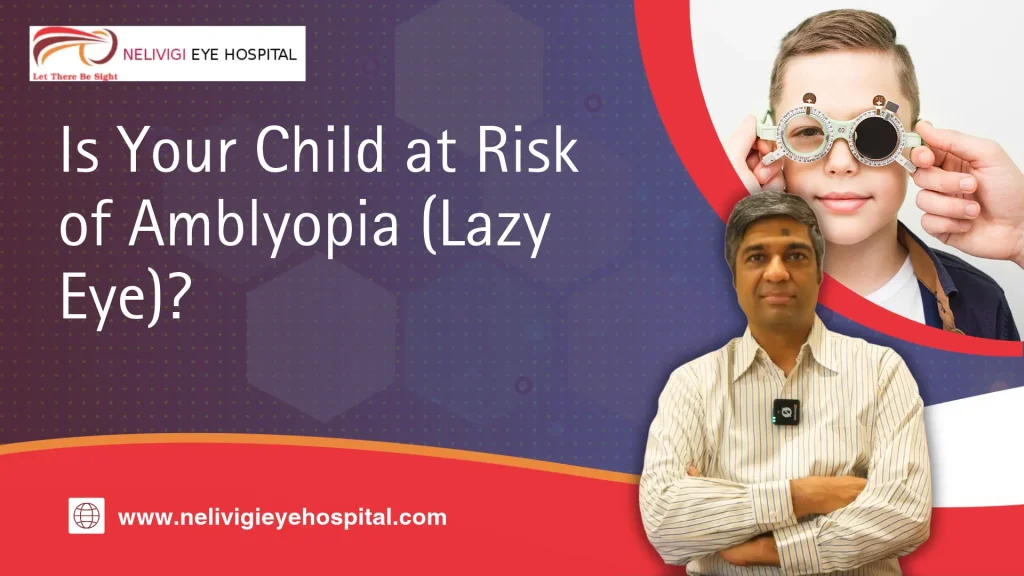
In this video, the doctor explains what amblyopia is, why children develop lazy eye, the warning signs parents should watch for, and the importance of early eye treatment.
1. What Is Amblyopia (Lazy Eye)?
Amblyopia is a vision development condition in which one eye has reduced vision because the brain and eye are not working together properly during childhood.
It usually develops when the brain favours one eye over the other. Although the affected eye may appear completely normal, its vision may not develop properly.
Common causes include:
- Squint (Strabismus): When both eyes do not point in the same direction.
- Refractive Errors: Significant differences in spectacle power between the two eyes.
- Cataract: A childhood cataract that blocks clear vision.
- Other Visual Obstructions: Conditions that prevent clear images from reaching the retina.
2. What Are the Warning Signs of Lazy Eye in Children?
Children may not realise that they have a vision problem because they may be accustomed to seeing more clearly through one eye.
Parents should watch for:
- Frequently closing or covering one eye.
- Tilting the head while looking at objects.
- Squinting or struggling to focus.
- Difficulty judging distances.
- One eye appearing misaligned.
- Poor visual attention or difficulty recognising objects.
Some children may not show any obvious symptoms. This makes routine childhood vision screening important.
3. Why Is Early Detection of Amblyopia Important?
The visual system develops rapidly during childhood. If one eye does not receive clear visual input during this period, normal vision development can be affected.
Early diagnosis is important because:
- Treatment is generally more effective when started early.
- It helps improve vision in the weaker eye.
- It can reduce the risk of permanent vision impairment.
- It supports better visual development and coordination.
Parents should not wait for their child to complain about poor eyesight before arranging an eye examination.
4. How Is Lazy Eye Treated in Children?
Treatment depends on the underlying cause, the child’s age, and the severity of vision reduction.
Common treatment options include:
- Prescription Glasses: Correct refractive errors and provide clearer vision.
- Eye Patching: Covering the stronger eye for prescribed periods encourages the weaker eye to work.
- Atropine Eye Drops: Sometimes used to temporarily blur vision in the stronger eye.
- Treatment of Underlying Conditions: Squint, cataracts, or other visual obstructions may require specific treatment.
Treatment should always be guided by an ophthalmologist. Regular follow-ups help monitor improvement and adjust the treatment plan.
5. How Can Parents Protect Their Child’s Vision?
Parents play an important role in identifying vision problems early.
- Schedule age-appropriate eye examinations.
- Observe unusual eye movements or head tilting.
- Do not ignore frequent squinting or closing one eye.
- Follow the prescribed treatment consistently.
- Attend regular follow-up appointments.
Early attention to visual development can make an important difference in a child’s long-term eye health.
When Should You Consult an Eye Specialist?
If your child frequently closes one eye, squints, tilts their head, or shows signs of difficulty seeing clearly, arrange an eye examination.
Even if your child does not show noticeable symptoms, routine vision screening is important because amblyopia can develop without obvious warning signs.
An eye specialist can assess your child’s vision, identify the underlying cause, and recommend appropriate treatment.
Frequently Asked Questions
1. At what age can lazy eye develop in children?
Amblyopia usually develops during early childhood, while the visual system is still developing. Early screening helps identify the condition at the right time.
2. Can lazy eye be completely cured?
Many children experience significant improvement with timely and appropriate treatment. The outcome depends on the child’s age, severity, and underlying cause.
3. Does every child with lazy eye need an eye patch?
No. Treatment depends on the cause and severity. Some children may need glasses alone, while others may require patching or atropine eye drops.
4. Can lazy eye affect both eyes?
Amblyopia more commonly affects one eye, but it can sometimes affect both eyes, particularly when there are significant uncorrected refractive errors.
5. Is lazy eye the same as squint?
No. Squint refers to misalignment of the eyes, whereas amblyopia refers to reduced vision development in one or both eyes. Squint can be one of the causes of amblyopia.
Conclusion
Amblyopia or lazy eye is a childhood vision condition that should not be ignored. Since children may not recognise or communicate their vision difficulties, parents need to pay attention to early warning signs and schedule regular eye examinations.
If you notice unusual eye movements or vision-related difficulties in your child, seek Lazy Eye Treatment for Children in Bellanduru. Early diagnosis and appropriate care can help improve visual development. Consulting an experienced specialist for Eye Treatment in Bangalore can help protect your child’s eyesight and support healthy vision.